


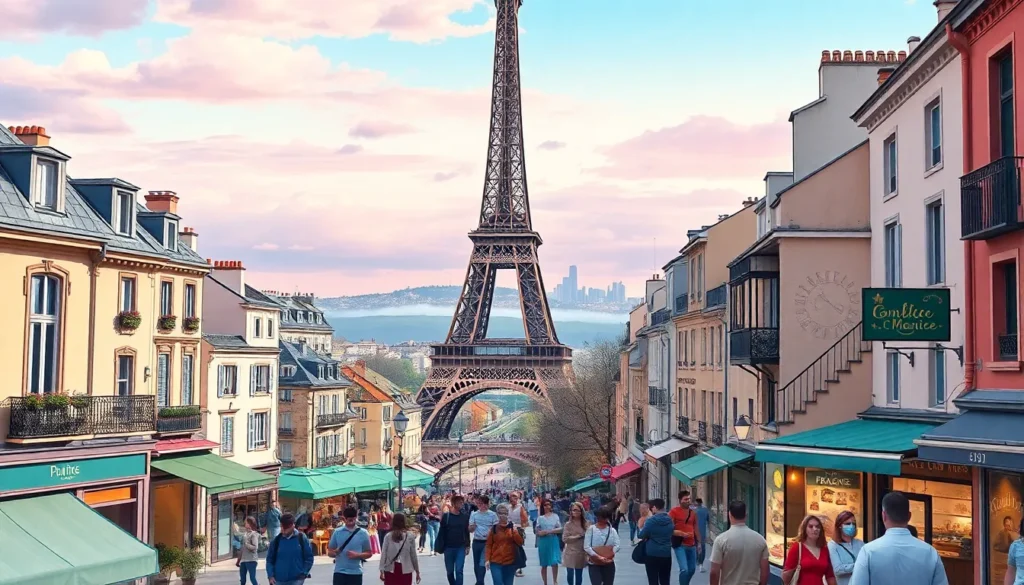
Every year, millions of travelers pack their bags and set off on adventures, but one country consistently steals the spotlight as the ultimate travel magnet. It’s a place where enchanting landscapes meet rich history and mouthwatering cuisine. Whether it’s the charming streets or the iconic landmarks, this destination has something for everyone.
Overview of Global Tourism
Global tourism significantly shapes economies worldwide, generating substantial revenue and creating numerous jobs. In 2019, international tourist arrivals reached 1.5 billion, illustrating the sector’s growth and importance. Countries like France, Spain, and the United States often rank as the most visited destinations, drawing millions each year due to their diverse attractions.
France captivated approximately 89 million tourists in 2019, thanks to attractions like the Eiffel Tower and the Louvre Museum. Spain follows closely, welcoming around 83 million travelers, who flock to its beautiful coastlines and rich cultural heritage. The United States, with about 79 million visitors, offers a mix of natural wonders and vibrant cities, appealing to a broad audience.
Travel trends indicate that cultural experiences and sustainable tourism play vital roles in travelers’ decisions. Authentic local experiences and eco-friendly accommodations often attract tourists looking for meaningful interactions. Statistics show that 70 percent of travelers express interest in activities that support local communities and promote sustainability.
Emerging destinations are gaining popularity as travelers seek unique experiences beyond traditional hotspots. Countries in Southeast Asia, Africa, and Latin America are increasingly attracting attention for their distinct cultures, landscapes, and adventures. For instance, destinations like Vietnam and Mexico see year-on-year growth in tourist arrivals, showcasing their allure.
Technology continues to influence global tourism, making travel planning simpler and more accessible. Online platforms enable users to compare options and book their trips with ease. Mobile applications help travelers navigate new cities and discover hidden gems more efficiently.
Tourism’s impact reaches beyond economics; it fosters cultural exchange and understanding among diverse populations. By bridging gaps between different cultures, tourism enhances global relationships and contributes to peaceful coexistence. As travel evolves, staying aware of trends and preferences remains essential for destinations aiming to attract more visitors.
Historical Trends in Tourism

Tourism patterns reveal significant changes over the decades. The growth of the travel industry reflects increasing globalization and accessibility.
Growth of Travel Industry
Travel industry expansion occurred steadily from the mid-20th century. In 2019, international tourist arrivals reached 1.5 billion, underscoring its significance. Travelers increasingly seek diverse experiences, driving demand for unique destinations. This demand results in economic boosts for countries like France, Spain, and the United States. Developments in air travel, online booking, and marketing strategies enhance accessibility. Emerging markets in Southeast Asia, Africa, and Latin America witness rising visitor numbers due to attractive offerings. Travelers now prioritize cultural immersion alongside traditional sightseeing, reshaping industry dynamics.
Impact of Global Events
Global events significantly influence travel trends. Economic recessions often lead to decreased tourist numbers, while recoveries result in swift rebounds. The COVID-19 pandemic exemplified a major disruption in 2020, causing global travel to drop dramatically. Safety concerns regularly dictate travel choices, prompting increased demand for private accommodations and local travel. Major sporting events or cultural festivals can spike interest in host countries. Political instability in certain regions curtails operations, affecting tourism flow. Governments and businesses adjust strategies based on these variables to maintain industry resilience.
The World’s Most Visited Country
France consistently ranks as the most visited country, attracting tourists with its unique offerings. Millions flock to its iconic landmarks, cultural experiences, and culinary delights each year.
Current Rankings
In 2019, France welcomed approximately 89 million international visitors, maintaining its status as the top destination globally. The United States follows closely with around 79 million visitors. Spain ranked third, attracting roughly 83 million tourists. Other countries like China and Italy also draw significant numbers, showcasing diverse attractions that cater to varied interests.
Tourist Attractions
Visitors to France experience a wealth of attractions. The Eiffel Tower stands as a global symbol, captivating millions each year. Art enthusiasts flock to the Louvre Museum, home to famous masterpieces. The charming streets of Paris and the picturesque landscapes of Provence add to the country’s allure. Additionally, regions like the French Riviera appeal to those seeking sun and luxury. Castles in the Loire Valley and the historic sites of Normandy further enrich the travel experience in France.
Economic Impact of Tourism
Tourism significantly shapes economies worldwide, influencing various sectors and contributing to national prosperity.
Contributions to GDP
Tourism serves as a major contributor to GDP in countries like France, where it accounted for over 9% in 2019. Economic activity generated by tourism includes spending on accommodations, dining, and entertainment. Countries that attract millions of visitors often experience substantial increases in foreign exchange earnings. The revenue from international tourists strengthens local businesses and stimulates economic growth. France ranks at the forefront of these trends, attracting 89 million visitors who contribute to its vibrant economy and diverse cultural sectors. With ongoing investments in infrastructure, tourism remains a vital pillar for economic stability.
Employment Opportunities
Tourism creates extensive employment opportunities across various sectors. In France, jobs related to hospitality, transport, and retail thrive due to the influx of international visitors. More than 2 million jobs in the country are directly linked to the tourism industry. Many regions benefit from seasonal employment, allowing local populations to earn income while showcasing their culture. A diverse workforce emerges as businesses expand to meet the demands of travelers. Overall, the tourism sector plays a crucial role in reducing unemployment rates and providing livelihoods for millions.
Cultural Exchange and Influence
France fosters rich cultural exchange and influence through its diverse heritage. Culinary traditions, such as delicious pastries and fine wines, attract food lovers from around the globe. Art forms significant connections, with visitors exploring masterpieces in the Louvre and Impressionist works in Montmartre.
Language plays a crucial role in cultural interactions. Many travelers learn basic French phrases, which enhances their experience while engaging with locals. This language barrier breakdown promotes authentic connections and deeper understanding of daily life.
Historical influences shape the character of France. Architectural styles, like Gothic and Renaissance, reveal the evolution of French culture over centuries. Visitors appreciate these styles, which blend history with modern life in cities like Paris and Lyon.
The arts and fashion also influence global trends. Paris Fashion Week showcases innovations, setting standards for designers worldwide. Local musicians and performers attract attention, creating a vibrant scene that encourages cultural dialogue.
Tourism acts as a bridge for cultural learning. At cultural festivals, travelers experience local traditions, dances, and music, fostering appreciation for French customs. Museums and galleries curate exhibitions that highlight both historical and contemporary works, further enhancing cross-cultural understanding.
Interpersonal exchanges during such visits often transcend mere tourism. Travelers gain insights into societal norms, which fosters mutual respect and promotes peace. Economic interactions through local markets contribute to enriching experiences, benefiting both visitors and residents alike.
Cultural influence extends beyond borders. France’s impact can be seen in cuisines adopted worldwide and artistic movements inspired by its heritage. These exchanges contribute to a more interconnected world, illustrating the importance of tourism in fostering global cultural relationships.
France’s status as the world’s most visited country underscores its unparalleled charm and cultural richness. With breathtaking landscapes and iconic landmarks it continues to draw millions of travelers eager to experience its unique offerings. The impact of tourism on France’s economy is profound with significant contributions to GDP and job creation.
As travel trends evolve a growing emphasis on cultural experiences and sustainability shapes the future of tourism. This evolution not only enhances the travel experience but also fosters deeper connections between visitors and local communities. France remains a beacon of cultural exchange and exploration demonstrating the vital role of tourism in promoting understanding and appreciation across borders.